Introductions
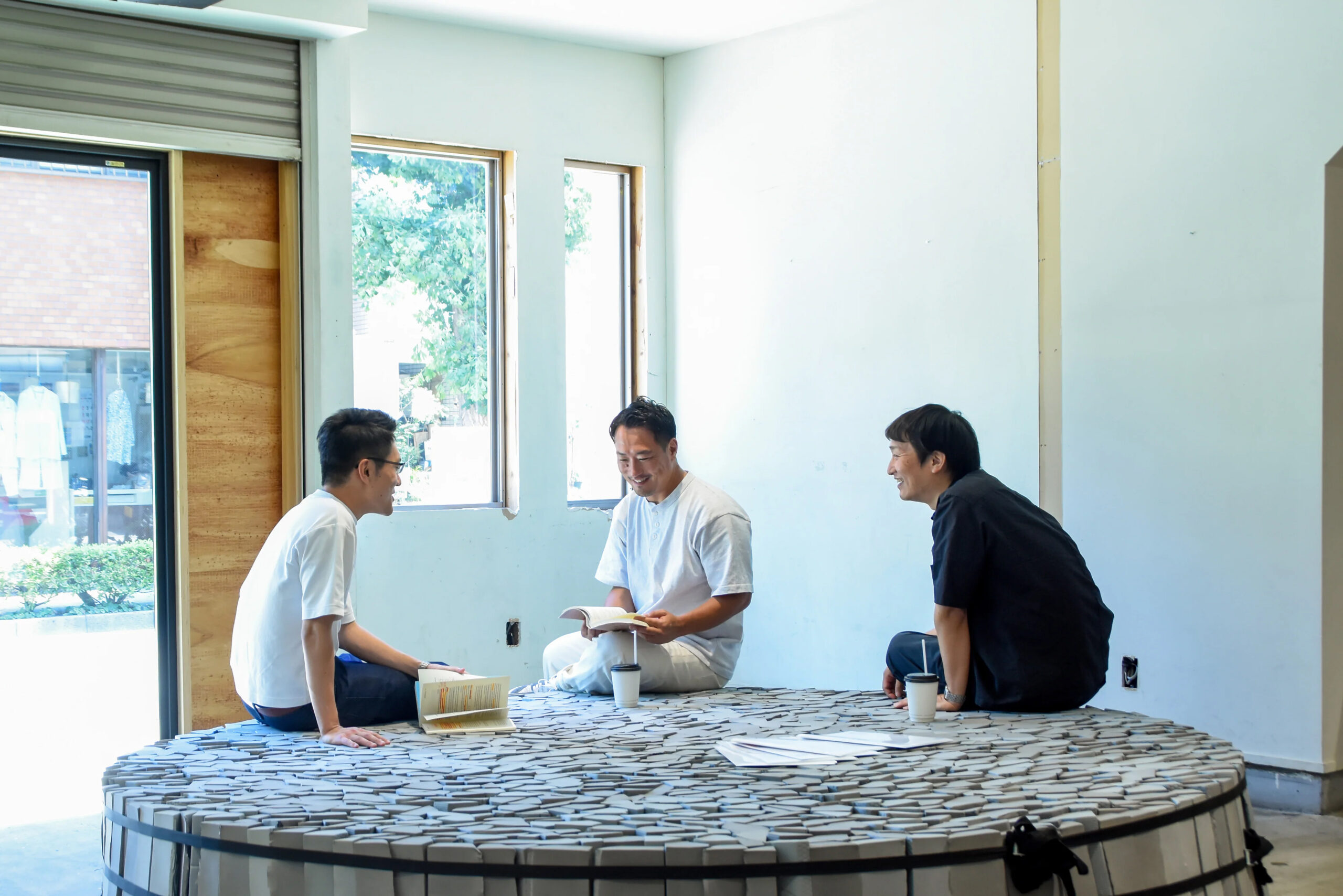
Nice Corporation is excited to announce that, as of April 5, 2023, we are a certified B Corp company. This is a global recognition for companies committed to balancing profit with purpose by prioritizing the environment, society, and the experiences of all stakeholders.
In recent years, our industry—the apparel manufacturing industry—has struggled with a less-than-positive image, from poor working conditions, low wages, to challenges around human rights due diligence. These challenges seem to be growing year after year.
Amidst this context, receiving the B Corp certification and being internationally recognized for our commitment to social and environmental impact underscores the careful thought and effort we’ve put into redefining what it means to be a sustainable sewing factory. At the same time, it reiterates the need to continue to deepen our commitment to our customers, employees, local communities, and the planet.
As a sewing factory with an annual revenue of hundreds of millions of yen, we now face the question of how far we can take this commitment. How can we continue to grow while remaining true to our social, environmental, and financial goals? Bridging the gap between our ideals and the reality on the ground is an everyday task. In this “B Impact Report,” we’ve outlined the progress we’ve made in our first year of certification and laid out our future goals. To keep supporting global creativity, we’re committed to valuing efforts toward becoming a better company, one step at a time.
We hope that our customers—both domestic and international—along with anyone interested in our mission, will take a moment to see the values we stand for at Nice Corporation.
April 1, 2025
Ikuma Izutsu
President
Nice Corporation
Company Profile and Business
Company Profile
| Company name | Nice Corporation |
| President | Ikuma Izutsu |
| Established | November 1990 |
| Number of employees | 36 (as of October 2024) |
| Capital | 10 million yen |
| Business | Clothing production |
| Monthly production: approximately | 6,000 units |
| Main clients | Patagonia Japan, TSI Inc. |
| Partner Companies | meiwa sangyo co.ltd 7-6 Oroshi-cho, Fukuyama, Hiroshima JAPAN 721-0954 Color de Kips 1-13-5 Kamino-cho Kojima, Kurashiki, Okayama JAPAN 711-0907 Nissen Factory Co., Ltd. 1-9-11 Kamino-cho Kojima, Kurashiki, Okayama JAPAN 711-0907 SUBJECT inc. 2-1585-1 Shimono-cho Kojima, Kurashiki, Okayama JAPAN 711-0907 Wells co., ltd 4-22-24 Hamano Minami-ku, Okayama, Okayama JAPAN 711-0845 |
History
| 1990 (Nov.) | Established Nice Corporation LLC |
| 1993 (Nov.) | Changed registration from limited-liability company to stock company Moved the head office from Kojima Shimono-cho to Kojima Kamino-cho |
| 2001 | Moved the head office from Kojima Kamino-cho to Kojima Shimono-cho |
| 2003 | Ikuma Izutsu entered the company |
| 2008 | Established the company’s own factory in Kojima Shimono-cho |
| 2013 | Introduced cutting machine CAD/CAM |
| 2015 | Opened Tamagawa Factory in Hagi, Yamaguchi |
| 2018 | Made SUBJECT LLC a subsidiary, and Tsuyoshi Yamanobe was its appointed representative |
| 2020 (Jul.) | Kazuhiko Izutsu and Ikuma Izutsu assumed the position of chairman and president respectively |
| 2023 (Jan.) | Launched of original brand NC PRODUCTS |
| 2023 (Apr.) | 20th Japanese company to be B Corp certified |
What Makes Nice Corporation Unique
Community Based
One-Stop Production
Our strength lies in our ability to manage the entire production process, from start to finish, by collaborating with local partners. This includes planning, patterning, cutting, sewing, washing and processing, printing, finishing, inspection, and shipping.
Cultivating Trust
and Technique
We prioritize cultivating trust across all fronts – between factories, within the workplace, and with our customers. As a company based in the birthplace of Japanese jeans, we combine the skilled craftsmanship rooted in the history of “Made in Kojima” with the fresh perspectives of the younger generation. With trust and technique at our core, we leverage the knowledge and techniques we’ve accumulated since our founding to bring our customers’ visions, down to every detail, to life.
Manufacturing
Beyond Denim
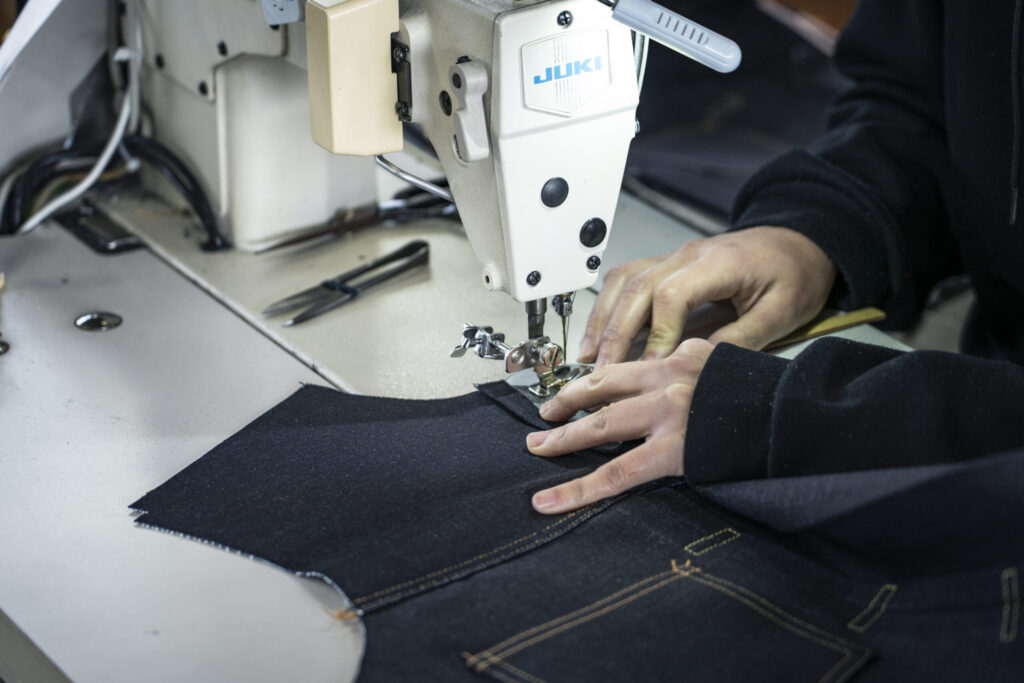
Denim accounts for about 60% of our production. However, we actively apply the techniques we’ve garnered through denim manufacturing to sewing denim with other materials, as well as producing other apparel items such as tops.

Governance
Our primary focus is to establish transparency within the company.
We actively encourage communication between management and employees, ensuring transparency across the company by disclosing business metrics and gathering feedback from employees.
Keywords: Ensuring transparency with employees by disclosing internal information; incorporating diverse opinions to create a comfortable working environment; establishing a feedback system that supports each employee
(i) Semi-Annual Sales Briefing
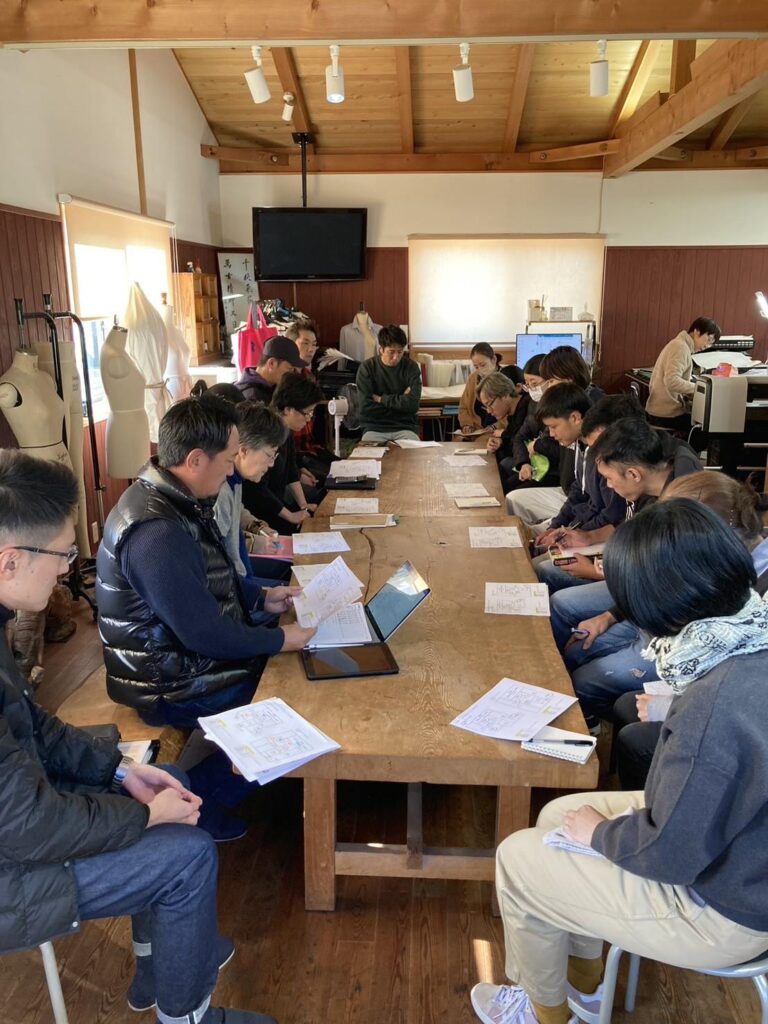
We hold a sales briefing twice a year, attended by factory workers as well as our technical trainees from Indonesia. During these meetings, we focus on explaining important business updates, including sales performance.
This year, we discussed a wide range of topics, from analyzing increases in overseas sales and rising raw material costs, as well as workforce expansion and sales strategies, fostering open dialogue between labor and management.
There were passionate discussions on improving factory productivity, including a moment when trainees brought Japanese dictionaries to help follow along with the briefing.
(ii) Implementation of Business Improvement Surveys
We regularly conduct anonymous surveys on improving business processes. This initiative aims to gather a wider variety of internal feedback, including suggestions on organization and tidiness of workplaces and the development of operational manuals.

(iii) Employee Interviews with External Experts
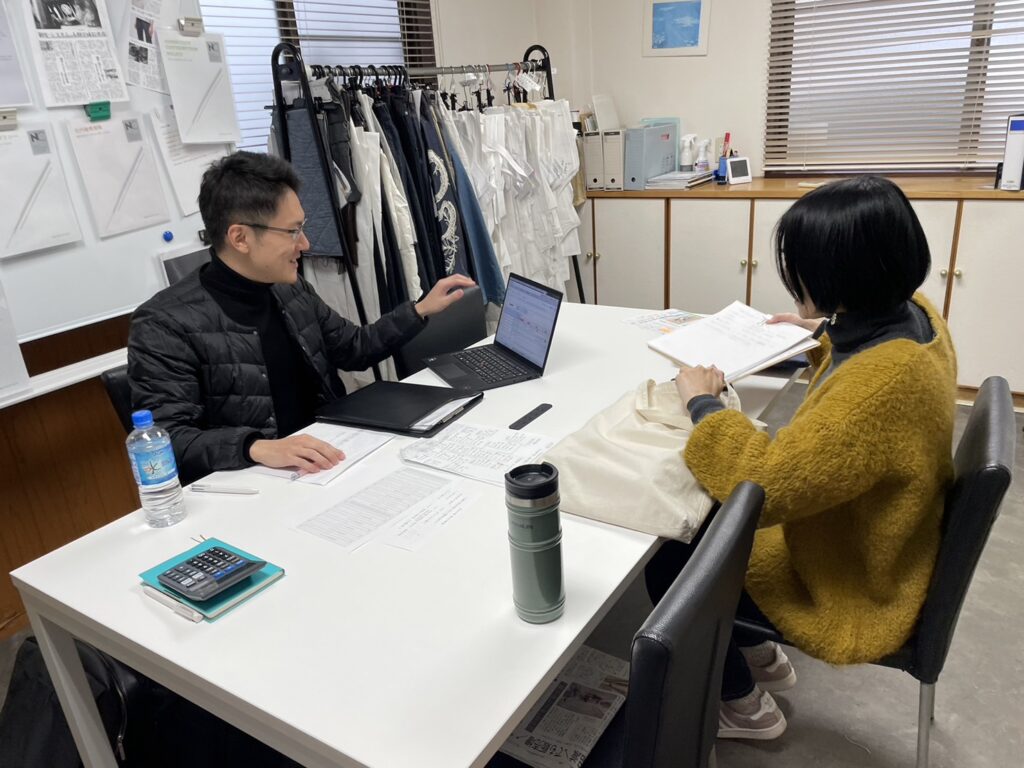
We invite external experts (ex. certified small and medium enterprise consultants [SME] and B Corp consultants) to conduct one-on-one interviews with employees. This initiative allows us to address concerns and questions that employees may find difficult to share directly with management.
Additionally, we ask SME consultants to gather employee feedback on work-related concerns to establish a system that collects a diverse range of opinions through open dialogue.
Reflecting on Governance
Through regular employee interviews, we’ve gained a clearer picture of the strengths and challenges on the ground—elements that aren’t always reflected in sales and profit figures. This process has helped us sharpen our collective direction as a company.
By bringing in external experts to facilitate communication between employees and management, we made it easier to translate differing perspectives and ensure a smooth flow of dialogue. We hope this will foster healthier, more harmonious relationships between employees and management (Yamatogi).
Creating a space where people can openly share their thoughts and values in response to feedback—especially those voices that have often gone unheard—was a significant step in strengthening our company for the future (Izutsu).
Our sales briefings have evolved, becoming clearer and more accessible to employees through improved materials and a presentation format that incorporates slides. These sessions not only help to keep everyone informed on the company’s progress and plans, but also ensure that our team stays aligned with our vision: to prioritize “mindful manufacturing” while working toward our larger goal of “supporting creativity around the world.” These ongoing improvements are key to advancing together as one team.
Workers
We’re committed to expanding employee benefits and enhancing employee fulfillment at work. Through a range of training programs and employee satisfaction surveys, we are actively working to create a work environment that supports employees’ well-being.
Keywords: Support career advancement through skill transfer; expand perspectives by engaging in cross-disciplinary work; provide opportunities for leisure and education, including for employee families; initiatives to foster independence; collect employee opinions to analyze and address challenges.
(i) Employee Growth Rate
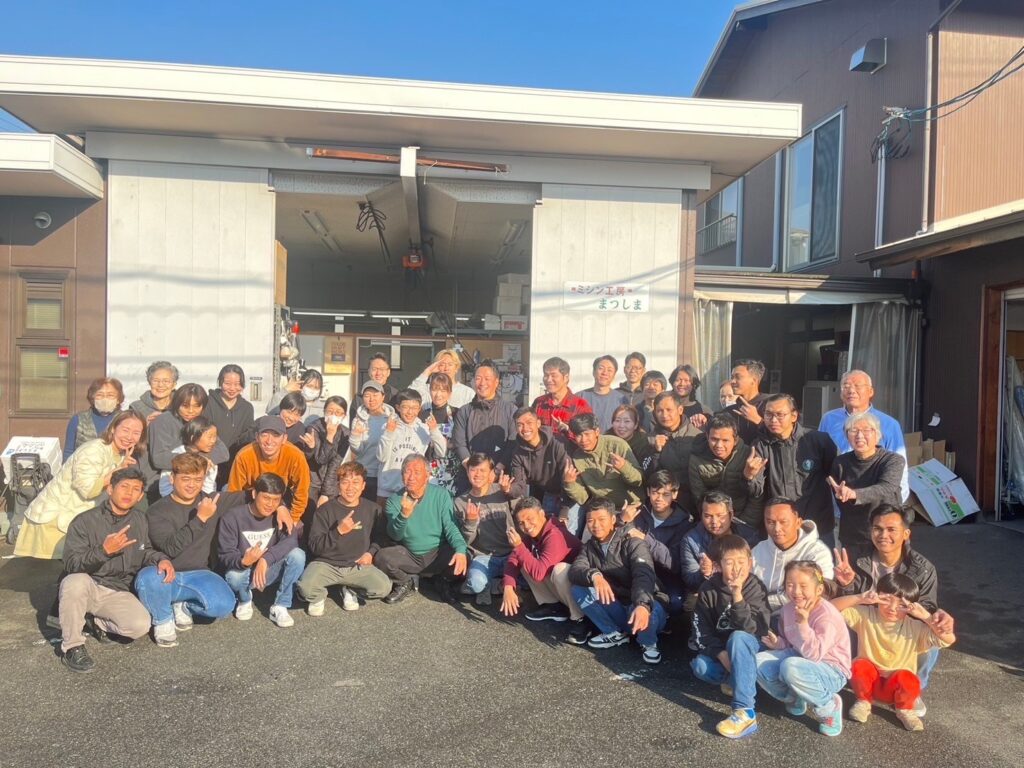
Compared to the end of the previous fiscal year (April 2023), the head office factory saw an increase of 6 employees (4 regular employees and 2 trainees), and the Tamagawa factory also added 6 new employees (1 regular employee and 5 trainees).
Total employees: 35 → 38
(an increase of 3 employees for the full year)

(ii) Employee Training Initiatives
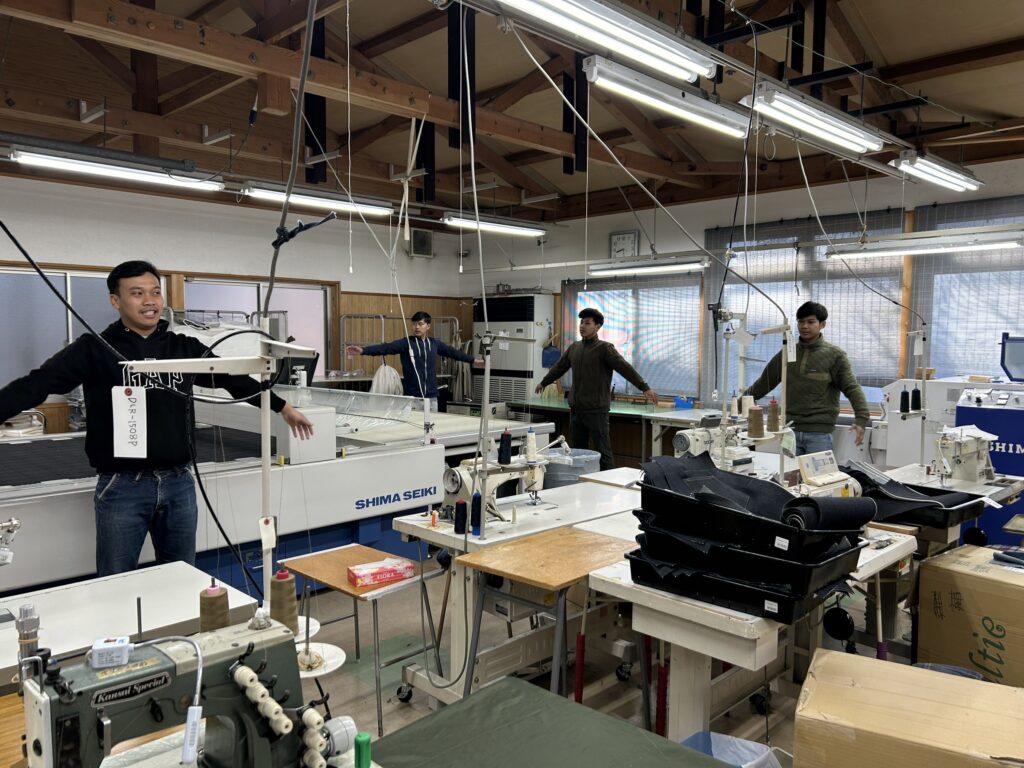
In response to the growing number of younger workers at our head office factory, we’ve introduced new-employee training to help them learn sewing techniques. These recruits work on mass production lines while also working closely with dedicated mentors on sample sewing tasks. This training helps them develop their skills in line with the demands of both domestic and international high-end brands, while also providing support for their concerns and challenges.
Additionally, employees in production management participate in discussions regarding our in-house brand “NC PRODUCTS.” This training goes beyond their usual roles, encouraging cross-departmental collaboration to broaden their knowledge and expertise.
In December 2023, with the cooperation of a sewing factory outside the prefecture, we organized a training trip to enhance the technical skills and professional awareness of our young workers. The trip was a valuable experience for everyone involved; we noticed a clear improvement in sewing speed among both employees and trainees after the trip.

(iii) Employee Benefits and Family-Friendly Activities
Every morning, we begin the day with a group stretching session known as radio taiso (a traditional Japanese morning exercise routine). This helps employees loosen up before starting work. We end the session with a handshake to promote unity and a positive atmosphere across the company.
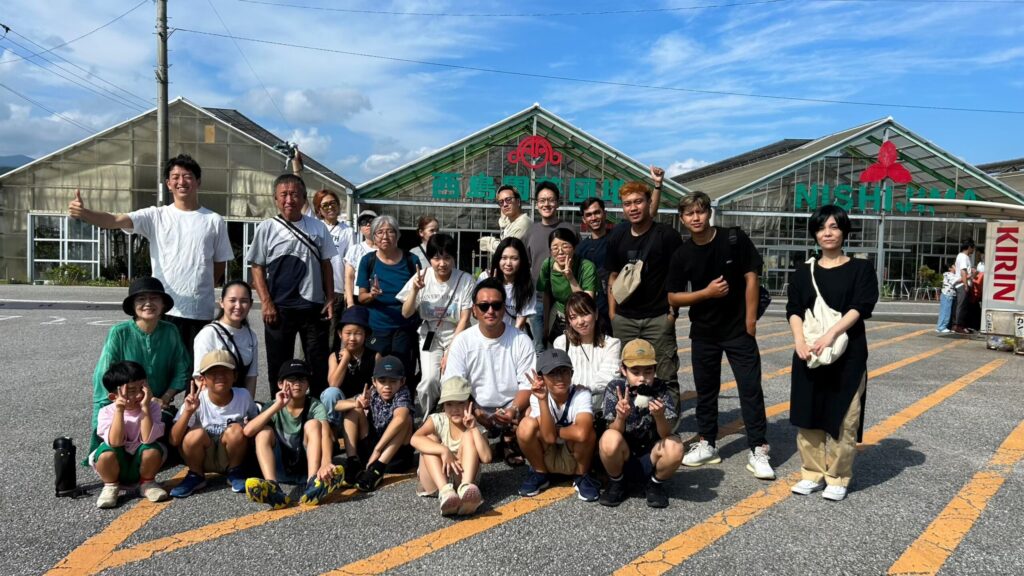
We also organize seasonal events like cherry blossom viewing parties, company trips where employees can bring their families, and regular in-house study sessions. These initiatives strengthen relationships among employees and provide opportunities for relaxation and personal development.
(iv) Employee Performance Evaluation
Employees participate in performance reviews twice a year. These are based on self-assessed evaluation sheets. To foster a sense of self-efficacy and proactivity, employees set annual goals at the beginning of each work year and reflect on their achievements at the end of the work period. This approach encourages greater autonomy in how each employee approaches their work.

(v) Employee Satisfaction Survey
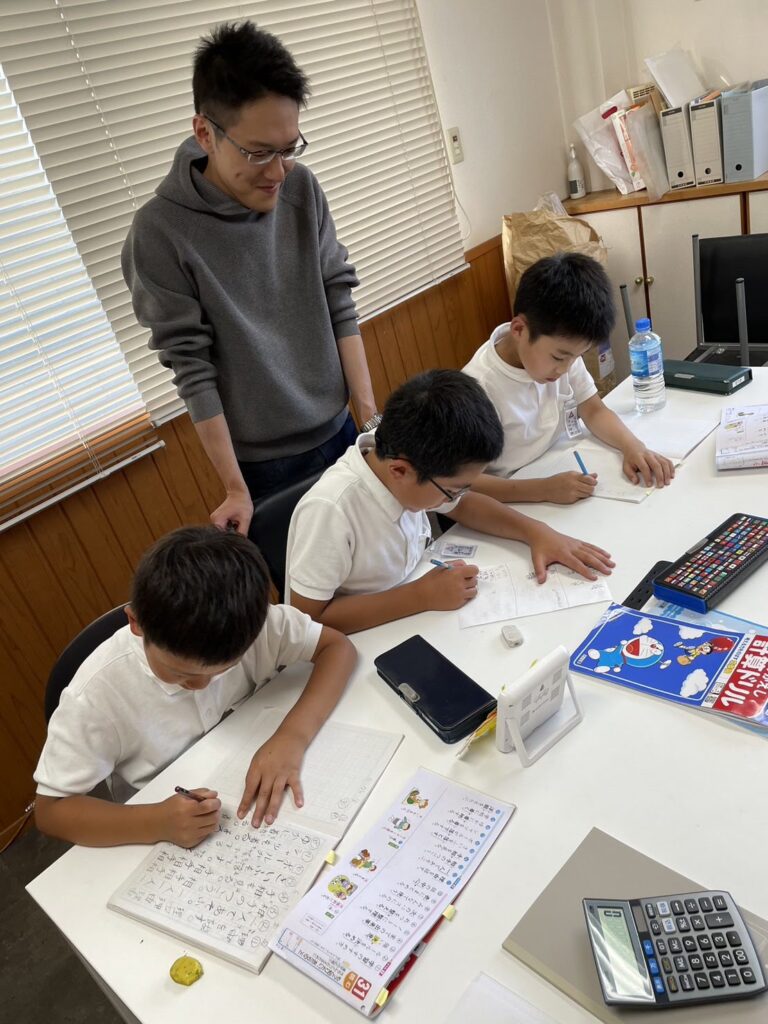
Every six months, we conduct an Employee Satisfaction Survey to gather feedback on job satisfaction, concerns, and suggestions. The results are analyzed both quantitatively and qualitatively. With the feedback we gather, we make improvements such as enforcing stricter separation of smoking areas and upgrading restroom facilities.
In the most recent survey conducted in October 2023, the head office factory received high scores: over 90% for overall satisfaction and 100% satisfaction among employees in terms of work engagement.
(Note: Overall satisfaction refers to responses of “satisfied” or higher, and work engagement refers to responses of “somewhat agree” or higher to the question, “Do you want to continue working here?”)
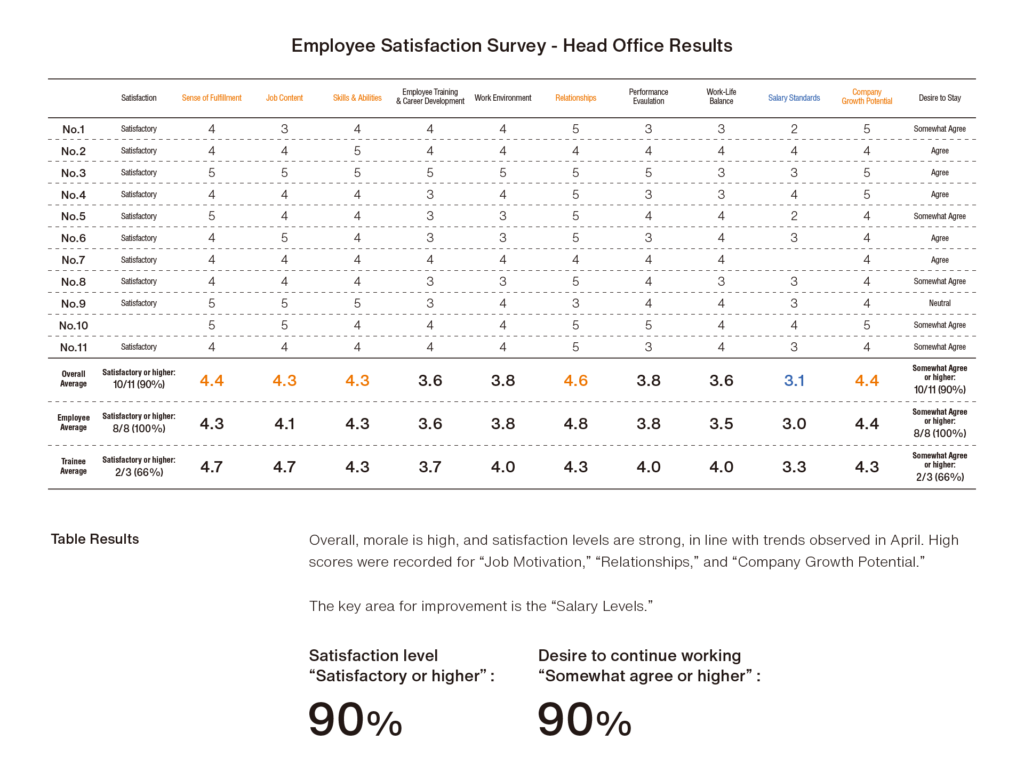
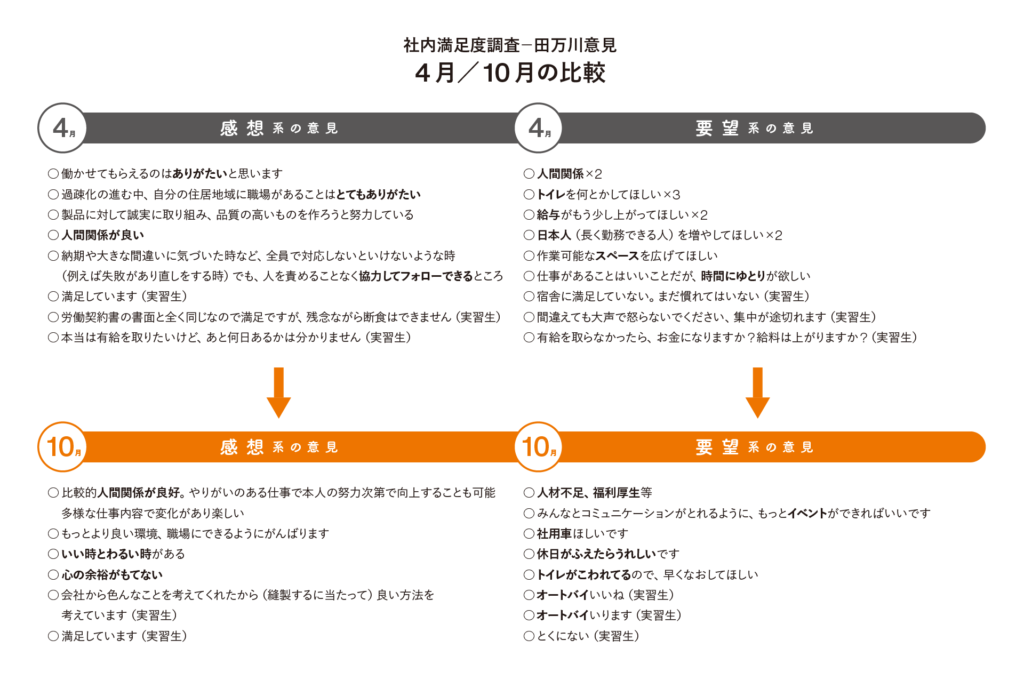
Improvements have been made based on employee feedback.
Additionally, we observed shifts in the content of the feedback over time.
At the Tamagawa factory, overall satisfaction was 40%, and work engagement was at 50%. In response, we’ve made improvements to the restroom facilities and are focusing on shifting to a younger workforce demographic to enhance employee satisfaction.
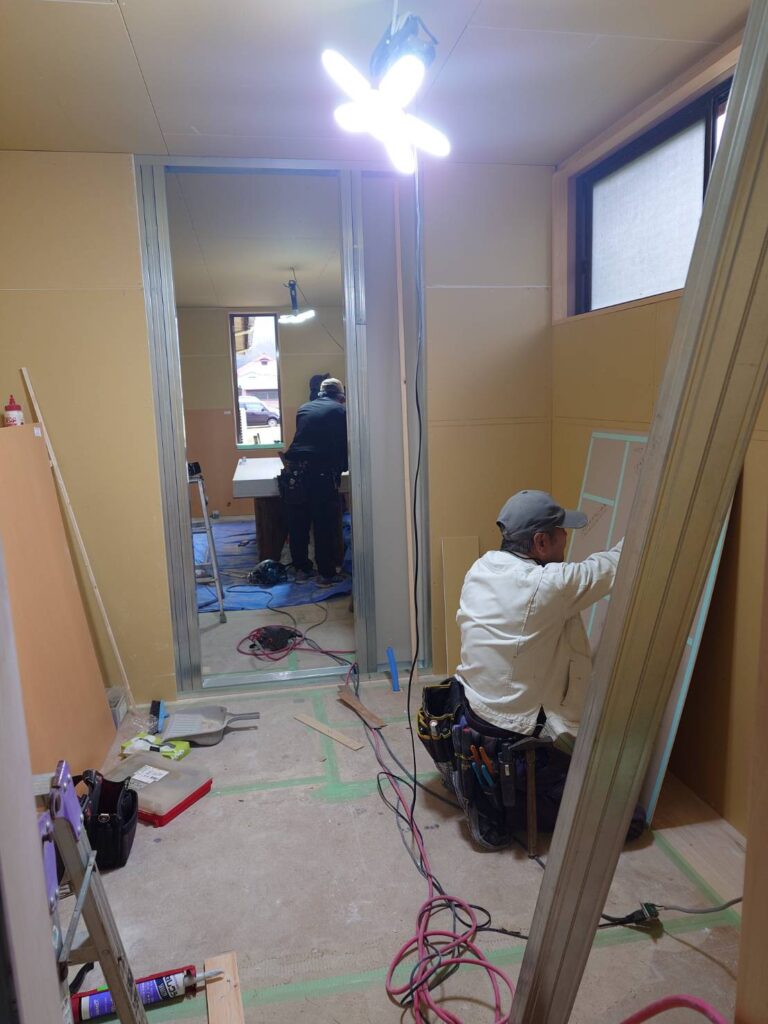
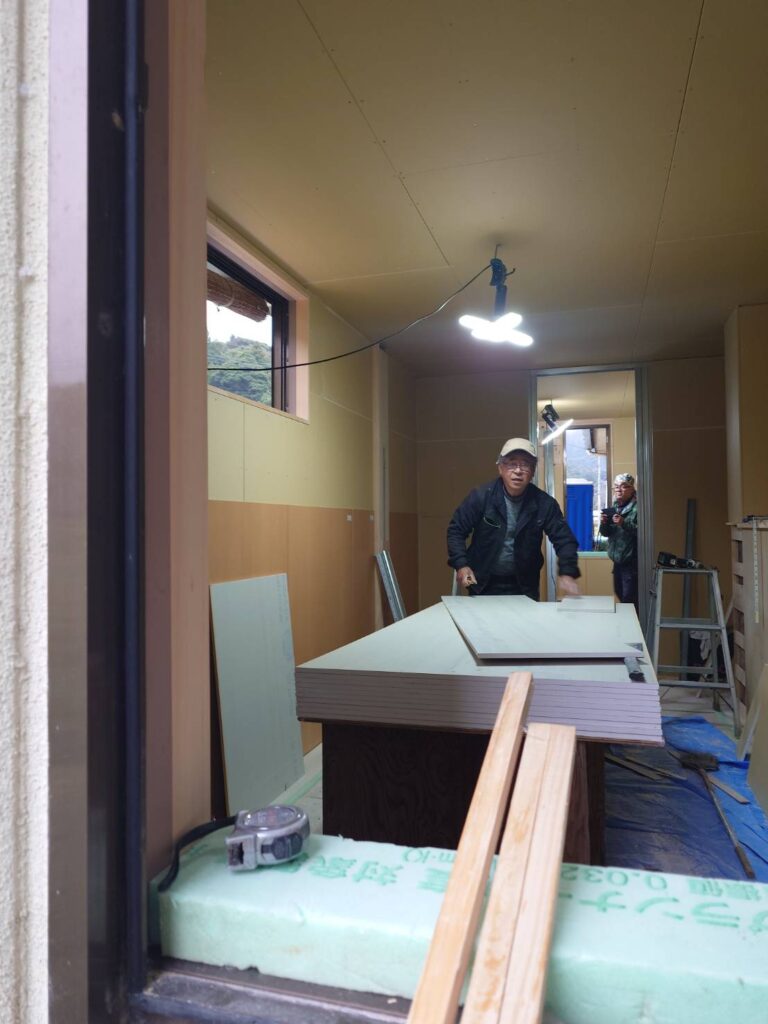
In light of the employee satisfaction survey, we carried out renovation work on the restroom facilities at the Tamagawa Factory. [Completion: April 2024]
Reflecting on Our Workers
The “Workers” category is one of our top priorities in our B Corp efforts. The reason is simple:
we are part of a labor-intensive garment manufacturing industry, where skilled hands are essential. With labor shortages predicted to intensify in the coming years, we believe that improving employee conditions while expanding both retention and recruitment is critical to ensuring the long-term sustainability of our business. (Yamatogi)
Fortunately, we’re seeing an uptick in new hires, most of whom have stayed with us. We’re committed to continuously improving the work environment by gathering feedback through satisfaction surveys and implementing improvements where possible. By ensuring our employees’ voices are heard and actively responding to their needs, we hope to foster a stronger, more engaged workforce.
One of our key initiatives is developing clear career paths within the company. Without defining how employees can position themselves for career advancement and salary growth, nurturing them as long-term professionals in the industry becomes difficult. This initiative includes evaluating both technical sewing skills and management abilities, with regular performance reviews throughout the year to inform salary adjustments. We plan to implement this approach for our factory workers at the head office starting in the April 2025 fiscal term.
This initiative is closely tied to employee education as well. We’ve structured our educational programs to align with salary progression pathways. For instance, some of our roles are based on an employee’s management skills, with promotion requirements including the training of new employees and providing daily support to them.
Additionally, we’re gradually developing programs focused on skill advancement. Finding ways to make technical skill acquisition more accessible and efficient, will not only improve the quality of our manufacturing but also help each individual in their career growth. (Izutsu)
Looking ahead, we plan to introduce cross-skill training opportunities, where our factory workers can visit retail locations that sell the products they help create. Experiencing the store environments and customer bases of top-tier independent brands will not only help them take pride in their work but also allow them to learn the “high-quality standards” that customers expect.
Community
We prioritize working with local businesses to contribute to the economic development of our region. Additionally, by participating in local festivals and events, we actively contribute to the promotion of our local communities.
Keywords: Creating career paths regardless of gender, age, or nationality; Supporting local economic activities; Creating a socially and environmentally conscious supply chain unique to our company.
(i) Diversity, Equity, and Inclusion
Female employees:
27 out of 38 total employees (71%)
Female managers:
5 out of 8 total managers (62%)
Age distribution:
20s: 15 employees
30s: 4 employees
40s: 6 employees
50s: 4 employees
60s: 7 employees
70s: 2 employees

(ii) Working with Local Businesses
The majority of our annual expenditures in the current fiscal year were directed towards:
Raw Materials:
88% spent with local suppliers
Outsourced processing:
97% spent with local suppliers
This highlights how our business activities are driving economic support for local suppliers.
Additionally, 50% of our non-labor costs (calculated as total expenses excluding wages, rent, utilities, and taxes) are paid to local businesses. We will continue to move in this direction, maintaining and expanding our transactions with local enterprises, to continue contributing to regional economic development.
Definition of “local businesses”: Suppliers located within 80 km of our headquarters.

(iii) Community Engagement
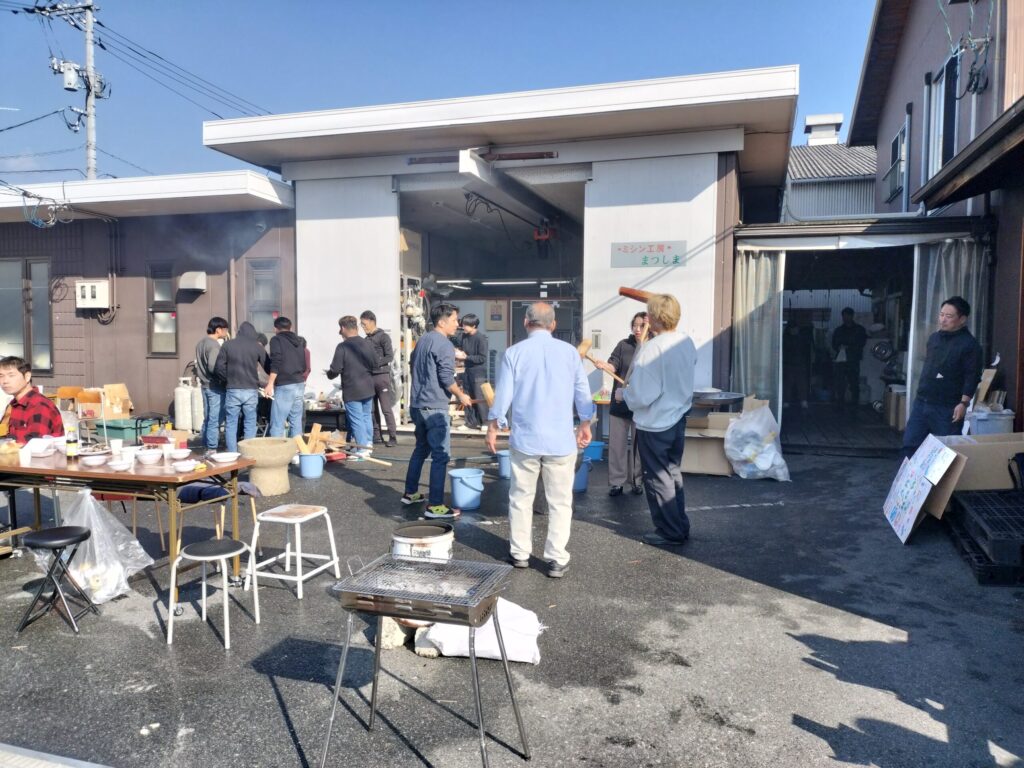
We actively participate in local community activities at our head office. We participate in the Kojima region’s Kou Hachiman Shrine Festival by sending over our staff, supporting operational costs, and sharing our company facilities. We also host a mochi-pounding event for our business partners and other stakeholders at the end of each year. These events have become annual traditions at our company.

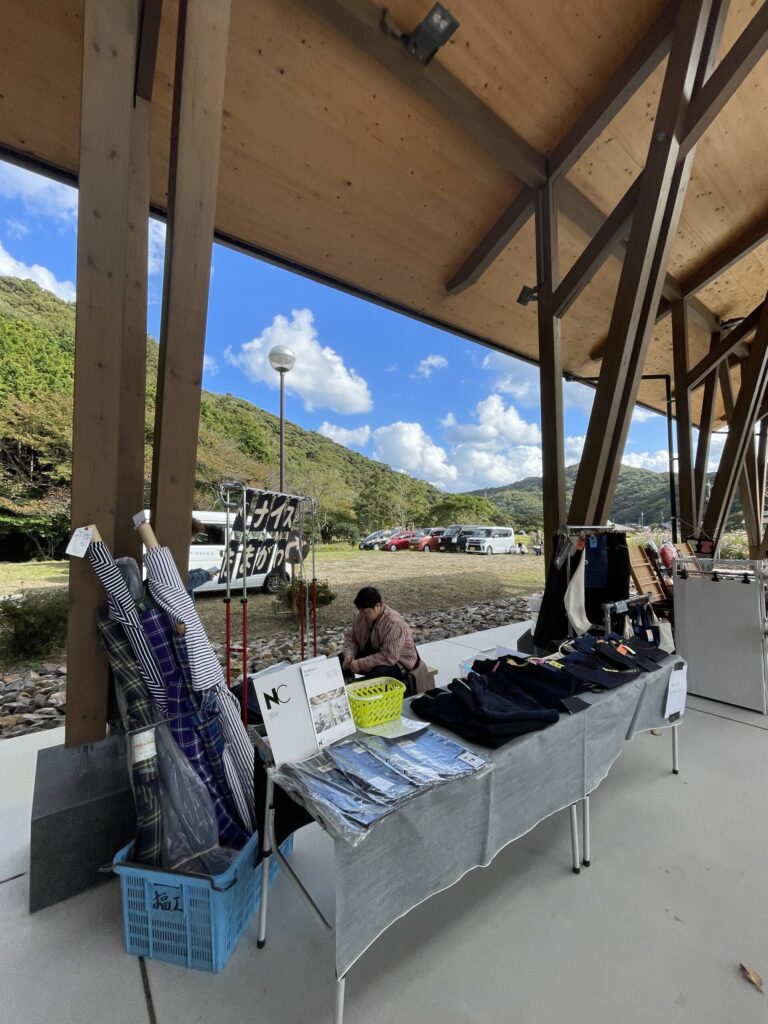
At our Tamagawa factory, we participated in the local handmade market hosted by a nearby michinoeki (rest stops) in October 2023, where employees sold small handcrafted denim items.

(iv) Supply Chain Management
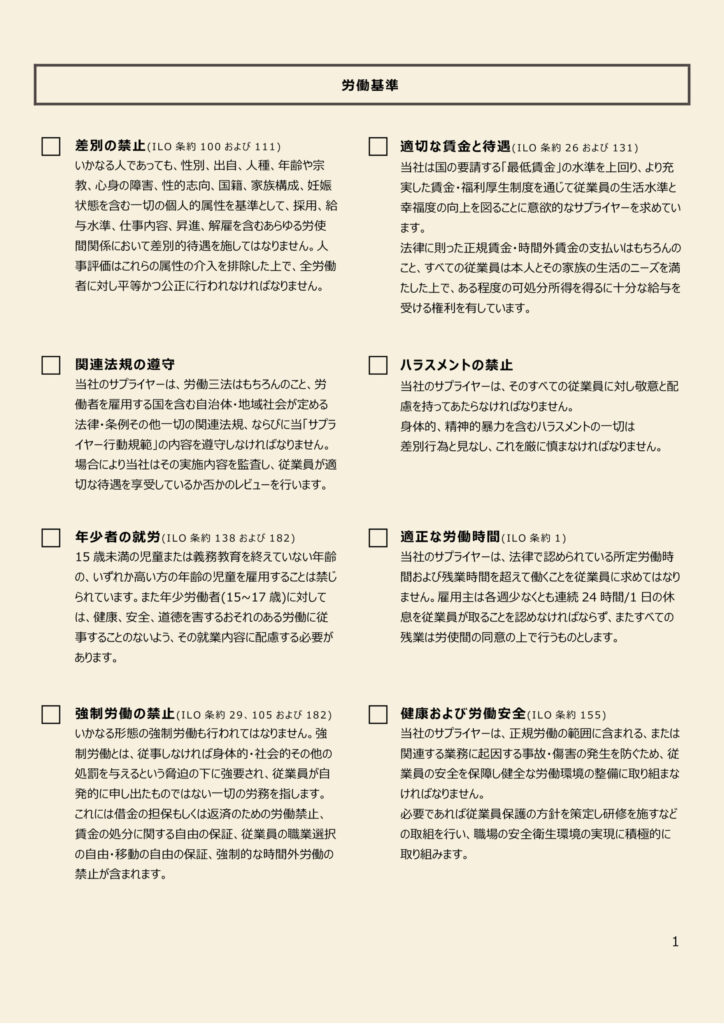
We developed our very own Supplier Code of Conduct, which highlights various social and
environmental expectations for our business partners. This year, we provided two suppliers with a copy of the code and explained its contents.
As the industry increasingly calls for human rights due diligence and effective supply chain
management, we, as a B Corp-certified company, will continue our efforts to create a supply chain that values both human rights and environmental sustainability.
Reflecting on Community
When it comes to Community, we believe that the traits Nice Corporation has always championed—creating a workplace where everyone, regardless of gender, can thrive and contribute to the local economy—aligns perfectly with B Corp standards.
Women have long been at the heart of Japan’s garment industry. Today, women still make up the majority of our frontline workers, many of them also leading the teams as managers. At Nice Corporation, we’re committed to keeping this momentum going, continuously improving and maintaining a work environment where women can thrive and take on leadership roles in the future.
With regards to our impact on the local economy, the geographic advantage of being at the heart of the Kojima region—home to a cluster of suppliers in nearby areas like the coastal regions of Setouchi, Kagawa, and Fukuyama, Hiroshima—allows Nice Corporation’s business activities to directly contribute to the region’s economic growth. Above all, this is a testament to the superiority of the Kojima region – the birthplace of Japanese denim.
With our suppliers concentrated in the local area, it also brings positive impacts beyond economic growth. It ensures easier traceability for our customers, and reduces commuting and transportation distances, minimizing environmental impact. With increasing demands for social and environmental responsibility in the apparel industry, we believe that this regional strength will become even more meaningful in the future. (Yamatogi)
We’ll continue building strong relationships with local businesses – this is the most direct way to contribute to the region. As a B Corp, we aim to fulfill our responsibility to our partners by being transparent, via initiatives such as our Supplier Code of Conduct. (Izutsu)
Environment
We’re actively working on initiatives to reduce our environmental impact through efforts such as cutting CO₂ emissions and minimizing waste.
keywords: Tracking and reducing CO₂ emissions from our factories; Shifting to manufacturing processes that enable waste reuse.
(i) CO₂ Emissions
Both our head office factory and Tamagawa factories use Chugoku Electric Power’s renewable energy green plan, enabling us to operate with 100% renewable energy.
Regarding CO₂ emissions for Scope 1 and 2 (Note 1), the results were as follows:
Scope 1: 17.7 t-CO₂e
Scope 2: 55.6 t-CO₂e (Note 2)
When compared to the previous year’s results (May 2022 – April 2023):
Scope 1: 23.9 t-CO₂e
Scope 2: 52.4 t-CO₂e
We were able to achieve a 3.9% reduction in total emissions from the previous year.
(Emissions data has been rounded to the second decimal place.)
Scope 1: Direct greenhouse gas emissions from the company’s activities (e.g., combustion of fuel, industrial processes).
Scope 2: Indirect emissions from the consumption of electricity, heat, or steam supplied by another company.
Data Period: from May 2023 to April 2024.
CO₂ emissions were measured using the “e-dash” application provided by e-dash Inc.

(ii)Monitoring Waste Quantities
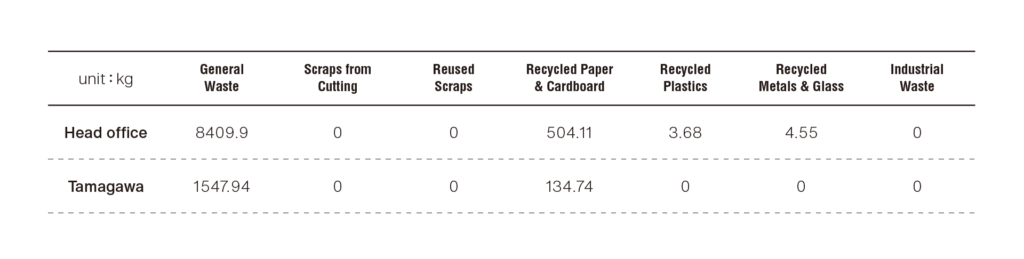
Both our headquarters and Tamagawa factories measure waste, and the results are as follows. Moving forward, we will continue to monitor and work on reducing waste.
(iii)Utilizing Waste
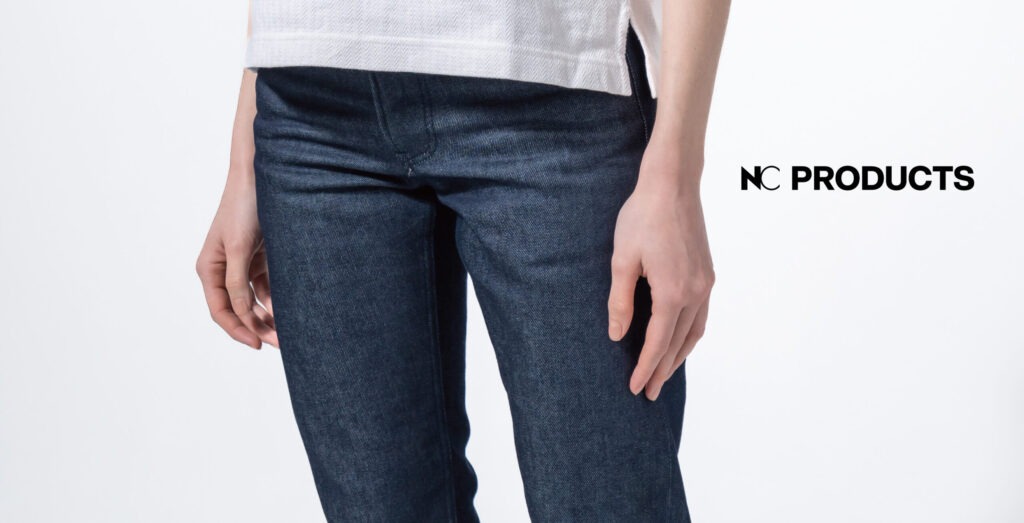
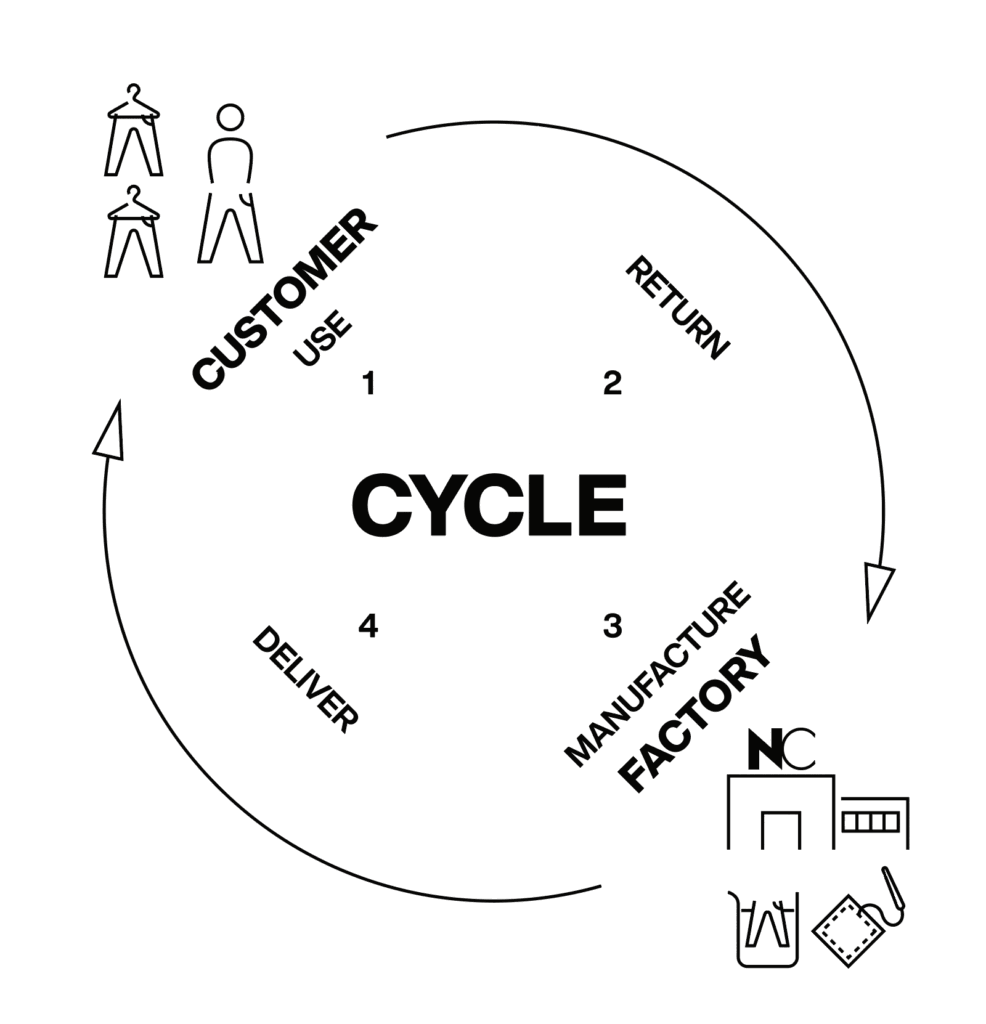
At our brand, “NC PRODUCTS,” we focus on creating products that are built to last. In our basic denim line, we use original fabrics made with 17% scrap material from our factory’s cutting processes. Additionally, worn-out products are collected and recycled into new items.
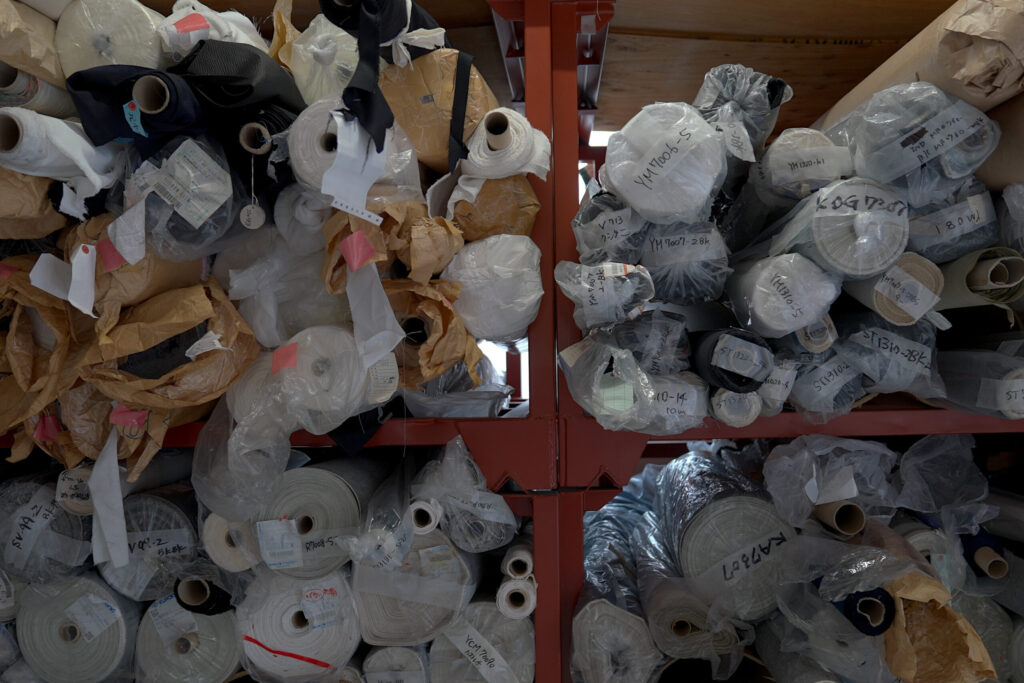
In our patchwork line, which includes rugs and cushions, we repurpose leftover fabric from our factory to create durable, long-lasting products.


Reflecting on Environment
One of the biggest shifts we made in our pursuit of B Corp certification was in how we source energy (Yamatogi). As a company responsible for the “sewing” portion of the apparel manufacturing supply chain, it was essential for us to focus on environmental considerations, particularly in the area of power usage, before focusing on water use or waste production.
We fully transitioned to the renewable energy green plan provided by Chugoku Electric Power, achieving 100% renewable energy-powered factory operations. Although we considered installing solar panels on-site for renewable energy procurement, the financial burden was significant.
We decided to purchase renewable energy as a more practical environmental solution.
One of our new goals is to set up an upcycling system that turns scraps from our fabric cutting into recycled fabric and products (Izutsu). This cutting process is currently being outsourced to another company, so we’ve requested our partners to measure the amount of scraps produced.
By tracking their byproducts as part of our business waste, we aim to fulfill our environmental responsibility as a B Corp.
Customers
We measure the value we provide to our customers through customer satisfaction surveys, and use their feedback to improve manufacturing quality and develop new products.
keywords: Turning customer feedback into higher-quality product production.
(i) Customer Satisfaction
As a new initiative this year, we conducted a satisfaction survey with our domestic OEM partners. The results are as follows:

We received a high level of satisfaction overall, a reflection of our ongoing efforts as a company.
In particular, we were highly praised for quality, adherence to deadlines, and the speed and quality of our responses. The pricing, which received a relatively lower evaluation, is an area we’re continuing to look into. We aim to identify fair pricing for orders while also working on improving employee satisfaction.
Reflecting on Customer
As a company involved in OEM apparel manufacturing, we needed to be creative in how we measure customer satisfaction. (Yamatogi)
In the first year, we conducted a satisfaction survey in the form of a simple questionnaire for our apparel manufacturer clients. Each company responded positively, and we received high marks for quality, adherence to delivery timelines, and the quality and speed of our response—all of which boosted our confidence as a factory. We take this feedback seriously and will continue striving for improvement. (Izutsu)
Moving forward, with our original brand, NC PRODUCTS, we plan to directly gather feedback from consumers—something we couldn’t do through OEM production. We aim to enhance two-way communication strategies that will help us refine our products and build a stronger fan base for NC PRODUCTS.
Media Coverage
| November 29, 2024 | Featured in FASHIONSNAP as a B Corp certified company. |
| November 12, 2024 | Featured in FASHIONSNAP as a B Corp certified company. |
| March 2024 Issue | NC PRODUCTS was featured in KU: NEL magazine. |
| January 2024 Issue | Featured in Diamond Select “Companies We Want Our Children to Join 2024,” as a B Corp-certified company. |
| January 2024 Issue | NC PRODUCTS was featured in EYESCREAM magazine. |
| December 2023 Issue | NC PRODUCTS was featured in GQ JAPAN magazine. |
| November 8, 2023 | NC PRODUCTS was featured in GQ JAPAN magazine. |
| July 25, 2023 | Featured in a textile news article as a B Corp certified company, highlighting Nice Corporation’s efforts to elevate the status of its sewing operations. |
| June 6, 2023 | Featured in a textile news article as a B Corp certified company. |
| May 17, 2023 | Featured in Nikkei MJ as a B Corp certified company. |
| April 12, 2023 | NC PRODUCTS was featured in pen magazine. |
| April 2023 Issue | NC PRODUCTS was featured in CASA BRUTUS magazine. |
| March 8, 2023 | An interview with Ikuma Izutsu, CEO of Nice Corporation, was featured in Senken Shimbun. |
| February 3, 2023 | NC PRODUCTS was featured in ELLE DECOR. |
| February 1, 2023 | NC PRODUCTS was featured in @DIME. |
| January 19, 2023 | NC PRODUCTS was featured in FORZA STYLE. |
| January 11, 2023 | NC PRODUCTS was featured in Senken Shimbun. |
Featured Article
In a column article, NC PRODUCTS shares its thoughts on B Corp certification.